Key takeaways:
- Claude Opus 4.8 is four times less likely than its predecessor to allow code flaws to pass unremarked, minimizing the risk of hallucinated bug resolutions.
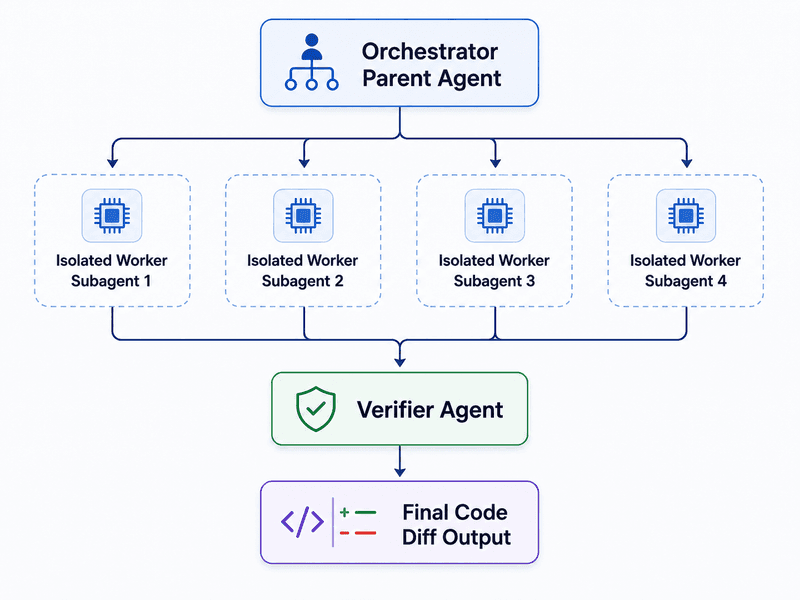
- An Orchestrator-and-Workers architecture deploys parallelized subagents to tackle complex migrations without context bloat or token exhaustion.
- The model delivers major performance gains, scoring 69.2% on SWE-bench Pro and 96.7% on USAMO 2026 Mathematics.
- Addressing a mid-2026 GitHub Actions vulnerability requires strict version locks (v1.0.94+) and isolated git worktrees.
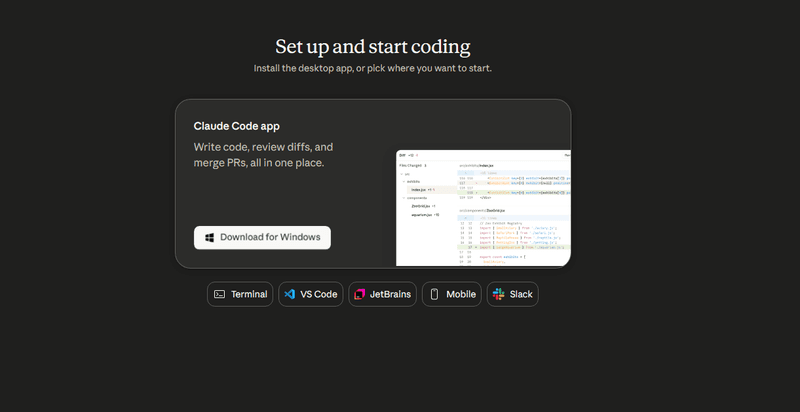
The software engineering industry is shifting away from early LLMs confined to single-file syntax checks. Claude Opus 4.8 is transforming code review and debugging with codebase-scale dynamic coordination and a 4x honesty upgrade.
For technical leaders, this update elevates Claude into a rigorous, autonomous repository auditor.
The honesty upgrade and performance leaps
The core bottleneck in delegating code reviews to AI has been the hallucinated resolution loop. This is where a model confidently declares a bug resolved while passing logical flaws.
Claude Opus 4.8 is 4x less likely than Opus 4.7 to let flaws pass unremarked, actively pushing back on flawed logic.
Performance climbs across key developer benchmarks:SWE-bench Pro (69.2% vs 64.3%): Enhanced multi-file repository debugging.Terminal-Bench 2.1 (74.6% vs 66.1%): Improved CLI operations and test execution.USAMO 2026 Math (96.7% vs 69.3%): Advanced algorithmic reasoning.
To optimize budgets, new Variable Effort Controls scale processing from low to "ultracode." Fast Mode runs 2.5x faster and 3x cheaper for routine linting, while prompt caching cuts input token costs by up to 90%.
Moving from one-shot prompts to multi-pass workflows
To prevent agent task drift and speculative refactoring, you must use Claude Opus 4.8 by checking a CLAUDE.md configuration file (under 200 lines) into your project root.
Production setups should expand on Karpathy’s core behavioral rules by patching two critical gaps:
- Read-Before-Write: Forces the agent to audit adjacent file exports to avoid duplicate utility implementations.
- Fail Loud: Blocks agents from inserting silent placeholders or mock data when external builds fail.
Next, replace one-shot directives with the 5-Part Review Prompt Pattern:Role → Goal → Scope → Parallel Workflow → Structured Review
Demanding a serialized JSON array as the final contract forces Claude Opus 4.8 to operate as a deterministic linting pipeline rather than a conversational chat interface.
Advanced debugging via orchestrator-and-workers architectures
Massive repository migrations cause context bloat and model collapse in single, sequential conversations. To use Claude Opus 4.8 effectively, the system uses Dynamic Workflows.
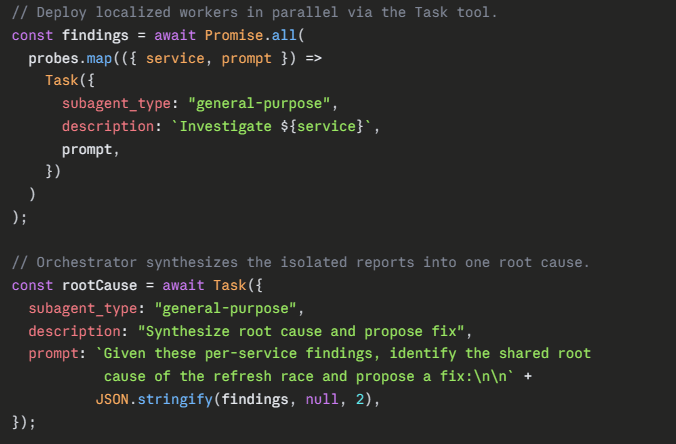
A parent model acts as an Orchestrator, writing a JavaScript script to deploy parallel, localized subagents via the Task tool. This isolates context windows and prevents data contamination.
The system resolves complex bugs, like a flaky microservices token refresh race condition, using a structured, automated pipeline:
Phase 1: Discovery
Opus 4.8 maps the repository using Grep and Glob tools to locate all authentication middleware handlers.
Phase 2: Analysis
Isolates the bug, identifying a lack of concurrency control in the gateway client.
Phase 3: Implementation
Injects an asynchronous queue to buffer simultaneous requests during a token swap.
Phase 4: Verification
Runs a mock 50-request concurrency test harness using the Bash tool to validate the fix before merge.
However, to keep parallel systems stable, engineers must mitigate three primary risks:
- Context Poisoning: Solved by deploying verifier agents to audit code before merge steps
- Cascading Failure: Mitigated by integrating circuit breakers into the orchestration script
- Silent Substitution: Blocked by strict global rules forcing subagents to fail if a task cannot be fully implemented
What engineering teams should do next?
To use Claude Opus 4.8 for full advantage and integrate it safely into daily operations, your development team should:
- Deploy across primary interfaces: Integrate the model via the local Claude Code CLI, native IDE extensions, and automated CI/CD hooks.
- Leverage local CLI tools: Use operational commands like /mcp to link database schemas, /agents to track background tasks, and /compact to prevent context bloat.
- Utilize computer-use: Allow the agent to safely record local environments, boot apps in simulators, and autonomously check for visual layout clipping.
- Secure CI/CD pipelines: Embed it as a repository gatekeeper, ensuring explicit protection against a critical [bot] vulnerability discovered in the checkWritePermissions utility function.
Conclusion: Automating code quality at scale
Claude Opus 4.8 establishes AI as an adversarial coprocessor rather than a basic assistant. By forcing explicit assumptions and machine-readable JSON contracts, businesses can automate code quality at scale.
Technical leaders must secure this autonomy by enforcing isolated git worktrees, locking CI/CD to patched versions, and keeping human-in-the-loop approvals.
FAQs for use Claude Opus 4.8
How does the 4x honesty upgrade affect daily code reviews?
The 4x honesty upgrade eliminates hallucinated resolutions. Instead of confidently approving flawed code, Claude Opus 4.8 flags structural uncertainties, challenges unsound architecture, and demands human clarification before compilation.
Can Claude Opus 4.8 run entirely unattended in enterprise CI/CD pipelines?
Yes, via headless GitHub Actions or GitLab CI/CD. However, to prevent supply chain exploits, you must restrict raw Bash tool access and lock your workflow configurations to version v1.0.94+.
What is the benefit of the Variable Effort Controls in Opus 4.8?
They map token spend directly to task complexity. Teams can use "low" or "fast" modes for minor documentation and routine linting, or scale up to "ultracode" for deep, multi-file debugging.
Disclaimer: This article is AI-assisted content and may contain errors. Platform features, policies, and availability may change. Always verify details with official sources.