Key facts
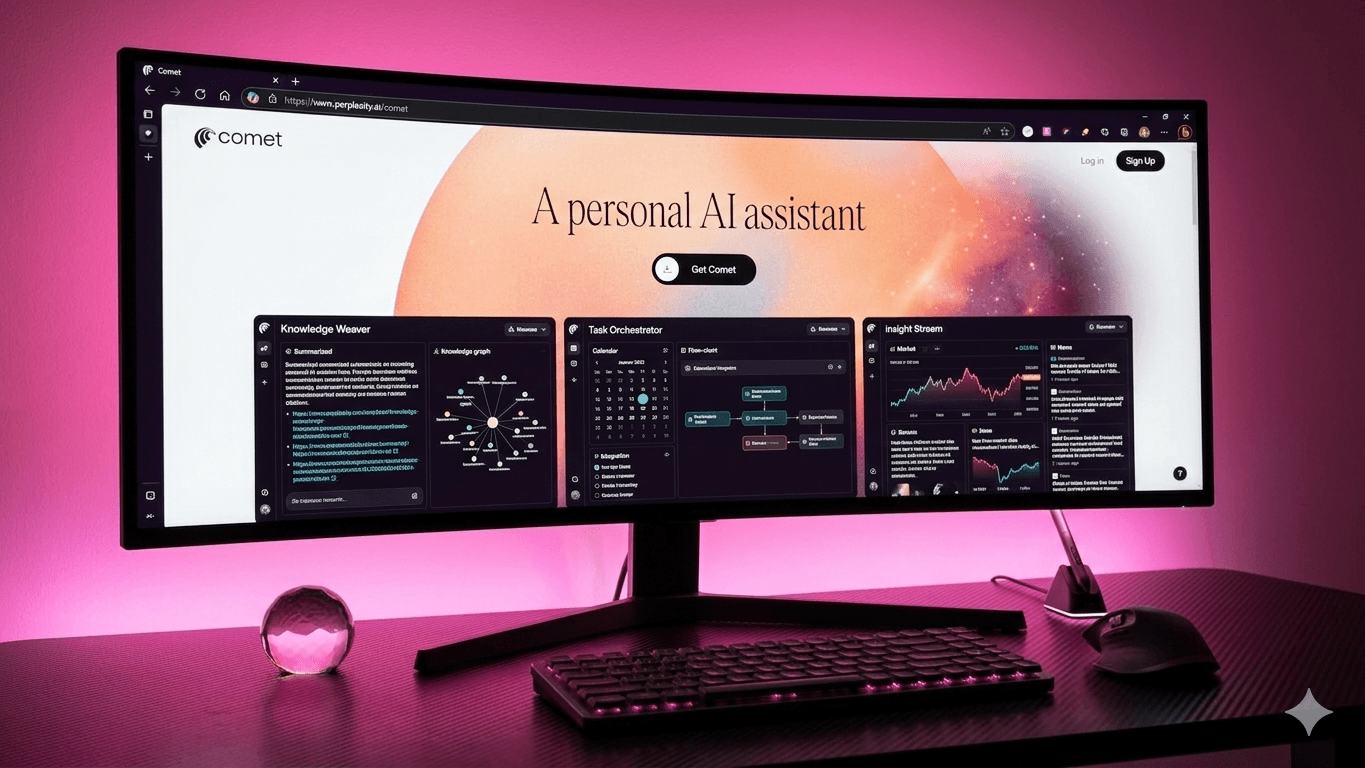
- Perplexity Comet is an AI-powered browser launched on desktop on July 9, 2025.
- By early October 2025, Comet became globally free.
- Comet uses Perplexity’s AI engine as its default search, delivering citation-backed summaries instead of traditional link lists.
- Analysts argue that AI-driven search is already shifting SEO practices, preferring authority citations over traditional ranking.
Imagine a web where you no longer scroll through pages of blue links. Instead, the browser gives you a concise, referenced answer right away. That world isn't hypothetical anymore.
With Comet and other AI browsers, we're seeing the first waves of an answer-centric web. People no longer click through multiple pages to find what they need. AI browsers now pull information from various sources and present it directly.
This changes everything about how your content gets discovered, consumed, and attributed. If your strategy still centers on ranking for keywords, it’s time to rethink that, definitely. The rules have changed, and waiting will only put you further back.
What Comet changes?
Comet isn't just another browser. It rewrites the rules of web research. Instead of showing a list of links, it gives you a summarized response backed by citations from multiple sources.
Users can still visit the underlying websites if they want. But most won't. Because why click when the answer is already there?
This one shift upends the link-driven architecture the web has run on for decades. For users, it's more convenient. For marketers and content creators, it means rethinking how visibility actually works.
Why links may fade?
Let's look at why clicking through to websites might soon become the exception, not the rule:
1. AI output over click-through
As more users adopt AI browsers, their expectations change. People start treating their browser as the answer engine. They stop expecting long result lists.
In fact, a 2025 behavioral study found that when search results came with an AI-generated summary, users clicked a traditional link only 8% of the time, down from 15% when no summary was shown.
2. Rising use of AI search
Comet rides on the growth of Perplexity AI. By mid-2025, Perplexity saw 780 million monthly queries and 170+ million monthly visits. With Comet now free and available globally since October 2025, AI-native browsing is poised to grow further.
If that growth rate holds, more users will get answers directly, reducing the need to click through to original content.
3. Authority and citations matter more
In the AI-first model, credibility and clarity win. AI browsers earn user trust by showing sources. Content that's factual, data-rich, and well-structured is more likely to be surfaced.
Traditional tactics like clickbait headlines and flashy visuals lose their edge when all that matters is being accurate and useful.
The new role of links
Links won't completely die. They'll shrink to a narrower but higher-value role. AI browsers still cite their sources, and those citations are links, just with new gatekeepers.
You won't get 100 casual visitors scanning five headlines. Instead, you'll get the one reader who clicked because the AI summary couldn't answer everything. That visitor is warmer, more qualified, and more conversion-ready.
Early data from AI-summary search experiments shows that when users do click, they spend more time on the page and convert at a higher intent. They arrive with context already filled in.
This is the new reality. Links won't vanish, but low-intent traffic will. What remains is more qualified, more engaged, and more primed to convert.
What does this mean for marketers?
- Content must be fact-dense: Pages with clear data, sources, and structured answers will attract citations. AI browsers favor content they can pull from and attribute confidently.
- Authority wins: Long-form thought leadership content, data reports, and case studies become more valuable. Your surface-level content will get passed over. Depth and credibility matter now more than ever.
- Less emphasis on clickbait hooks: Quality and clarity will win out over attention-grabbing tactics. AI browsers don't care about catchy headlines. They care about accuracy and usefulness.
- Earned-media footprint counts: If credible sites quote or reference you, AI browsers may surface those results preferentially. Being cited by trusted sources becomes a ranking signal in itself.
The final verdict
The web is evolving right in front of us. Atlas and Comet aren't experiments anymore. They're showing us what comes next.
If you're building a brand in 2026, the old playbook won't cut it. It’s time to stop chasing clicks and start building content that gets cited: factual, clear, and backed by real expertise. That's what AI browsers reward, and that's what keeps you visible.
FAQs
Will links disappear altogether from the web?
Not instantly, but AI browsers will reduce reliance on click-throughs over time.
Can I trust AI-generated answers from Comet?
Most of the time, if the browser cites credible sources, verify them for high-stakes decisions.
Does this mark the end of SEO as we know it?
No. It transforms SEO. Now citation-readiness and authoritative content matter more than ranking tricks.
Should I ditch link-based strategies immediately?
Not immediately. You should combine traditional link strategies with AI-ready content to cover both fronts and not abandon what's working.