Key Takeaways:
- TikTok launched "Watch it. Love it. Want it." across international markets this week, positioning itself as a full-funnel purchase platform
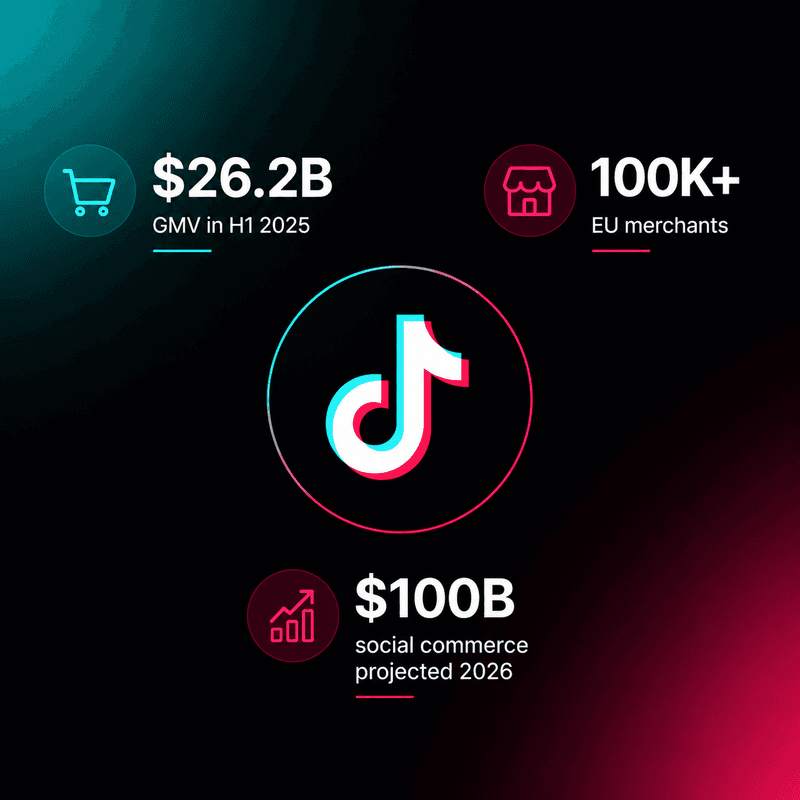
- TikTok Shop generated $26.2 billion in gross merchandise volume in the first half of 2025 alone
- Social commerce overall is projected to cross $100 billion in 2026, per Emarketer
- 93% of daily TikTok users research products before purchasing and 31% of UK online shoppers have already bought through TikTok
- TikTok Shop is projected to exceed $20 billion in US sales in 2026

TikTok is no longer pretending to be just an entertainment app. The company launched a global campaign this week that says exactly what it wants to be: a place where people discover products and buy them without leaving.
"Watch it. Love it. Want it." rolled out across international markets between May 7 and May 11. The messaging is direct. Users see a product in a video, feel something, and purchase it inside TikTok. The full funnel happens in one app.
The data behind the campaign suggests this is not aspirational marketing. It is a description of what is already happening at scale.
The commerce numbers are already massive
TikTok Shop generated $26.2 billion in gross merchandise volume in the first half of 2025. That run rate, if sustained, would put the platform's annual GMV above $50 billion.
In the US specifically, TikTok Shop is projected to exceed $20 billion in sales in 2026. That would make it one of the largest e-commerce players in the country by transaction volume.
The platform now hosts over 100,000 merchants across the European Union. In the UK, TikTok has become the fourth-largest beauty retailer, with the beauty sector seeing 60% year-over-year growth on the platform. 31% of UK online shoppers have already purchased something through TikTok.
Broader social commerce is growing alongside TikTok's rise. Emarketer projects total social commerce will cross $100 billion in 2026, with TikTok capturing a significant share.
Users are not just watching. They are researching and buying
The behavioral data is what makes TikTok's commerce push different from previous social shopping attempts.
93% of daily TikTok users research products before purchasing, according to Ipsos. That number suggests TikTok is not driving impulse purchases alone. Users are actively using the platform as a research tool, comparing products, reading comments, and watching reviews before they buy.
A 2026 Adobe Express report found that 49% of American consumers have used TikTok as a search engine. Among Gen Z, that reaches 65%. Google's own data from 2024 showed nearly 40% of Gen Z prefer searching on TikTok or Instagram over Google for everyday queries.
For content marketers, this means TikTok is now part of the consideration phase, not just the awareness phase. Users arrive with intent. They search for product categories, compare options through creator content, and make decisions based on what they see.
Fashion, beauty, and home tech lead the categories
The top-performing commerce categories on TikTok are consistent across markets:
- Beauty and personal care: 60% YoY growth in the UK, largest category by volume
- Fashion: Driven by creator try-ons, styling videos, and outfit-of-the-day content
- Home and tech: Growing through product demonstration and unboxing formats
- Food and wellness: Trending through recipe integration and supplement reviews
The format advantage is real. A 30-second TikTok video showing someone applying a product, wearing an outfit, or unboxing a gadget communicates more buying-relevant information than a static product listing. The visual proof converts browsers into buyers.
Why previous social commerce attempts failed and TikTok might not
Facebook tried social commerce multiple times. Instagram Shopping launched, stalled, and was deprioritized. The common failure pattern was that these platforms added shopping features on top of a social experience users were not interested in leaving.
TikTok's approach is different. The shopping happens inside the content format users already engage with. The product discovery is entertainment. There is no separate shopping tab that users ignore. The purchase flow is embedded in the feed.
The creator economy powers this model. Creators demonstrate products authentically. Viewers trust creator opinions more than brand advertising. The conversion happens because the recommendation feels personal, not promotional.
What this means for content and marketing teams
For brands still treating TikTok as a top-of-funnel awareness channel, the data says reconsider.
TikTok Shop integration means products can be linked directly from creator content. Affiliate programs let creators earn commissions, aligning their incentives with brand sales goals. The platform's algorithm rewards content that drives engagement, and commerce content that keeps users watching performs well algorithmically.
For content marketers, the action is to create content that serves both entertainment and purchase intent. Product demonstrations, honest reviews, comparison videos, and tutorials that naturally integrate products perform best.
For e-commerce brands, listing products on TikTok Shop is becoming as important as listing on Amazon or Google Shopping. The $26.2 billion in H1 2025 GMV makes TikTok a commerce platform at scale, not an experiment.
Disclaimer: This article is AI-assisted content and may contain errors. Commerce features and policies change frequently. Verify with official TikTok for Business documentation.