Key Takeaways:
- TikTok launched a keyword management feature, allowing creators to control the search terms attached to their videos
- Previously, TikTok auto-assigned keywords based on popular searches. Creators had no way to edit or remove them
- The new tool lets creators block irrelevant keywords and suggest new ones that better match their content
- TikTok retains final oversight on all keyword suggestions to prevent spam or unrelated tagging
- 49% of American consumers now use TikTok as a search engine, up from 41% two years ago
TikTok just gave creators something they have never had before: direct control over the keywords that determine how their videos get discovered in search.
Social Media Today reported the update on April 26, based on screenshots shared by app researcher Jonah Manzano on Threads. The feature is rolling out now.
Previously, TikTok automatically assigned keywords to every video based on popular search terms. Creators could see what TikTok tagged their content with, but had no way to change it. If the algorithm misread the content and assigned the wrong keywords, there was nothing to do about it.
How the new keyword tool works
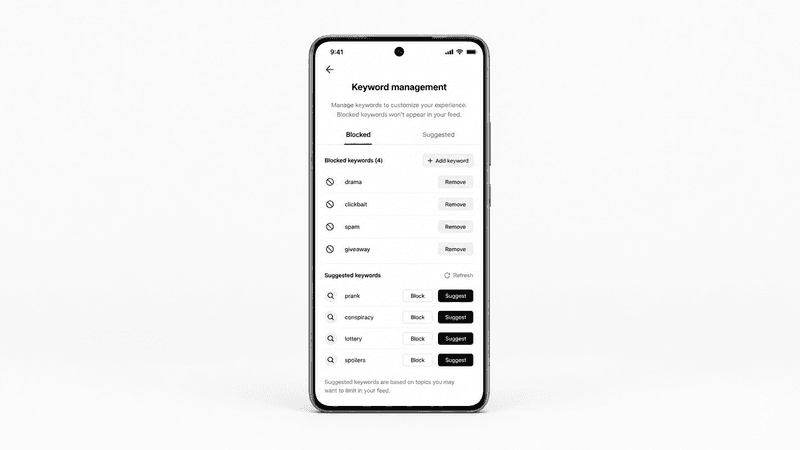
When creators open the keyword management screen, they see a list of terms TikTok has auto-assigned to their video. Each keyword is linked to popular searches on the platform.
From this screen, creators can do two things:
- Block specific keywords from being used for algorithmic matching
- Suggest additional keywords that better align with what the video actually covers
TikTok displays a message explaining: "This post displays keywords automatically added by TikTok based on popular searches. You can manage them at any time."
The platform retains final oversight. Suggested keywords must be deemed relevant by TikTok's system. Creators cannot add unrelated or misleading terms to game the algorithm. This is similar to how Google handles meta keywords in traditional SEO: input is allowed, but the platform decides what counts.
Why this matters for TikTok as a search engine
TikTok is not just a social media app anymore. It functions as a search engine for a growing share of consumers.
A 2026 Adobe Express report found that 49% of American consumers have used TikTok as a search engine. Among Gen Z, that number reaches 65%. Google's own data from 2024 showed nearly 40% of Gen Z prefer searching on TikTok or Instagram over Google for everyday queries like restaurant recommendations.
With that much search behavior happening on TikTok, how videos are indexed matters. Keyword metadata is the mechanism TikTok uses to match videos with search queries. Bad keyword assignments mean a video about skincare routines might show up in results for cooking tips. That wastes reach for the creator and frustrate the searcher.
Manual keyword control reduces these mismatches. Creators who understand their niche can tag their content more precisely than an algorithm scanning video frames and audio.
What content marketers should do with this
For brands and content marketers running TikTok strategies, the practical applications are straightforward.
Review keyword assignments on existing videos. Check whether TikTok's auto-assigned terms match what the video actually covers. Block anything irrelevant. Suggest terms that align with how your audience searches.
Use TikTok's Creator Search Insights tool alongside this feature. Search Insights shows which terms are trending and which have high demand but low supply. Adding those terms as keyword suggestions on relevant videos could improve discoverability.
Front-load keywords in captions, on-screen text, and spoken audio within the first three seconds. TikTok's algorithm indexes all three. The new keyword management tool adds a fourth layer of input, but it works best when it reinforces signals already present in the video content.
Do not treat this like hashtag stuffing. The oversight mechanism means TikTok will reject irrelevant suggestions. Quality and relevance will determine which keywords stick.
For brands competing for visibility in TikTok search results, this feature turns keyword optimization from something the algorithm controls entirely into something creators can actively influence. That is a meaningful change in how content distribution works on the platform.
Disclaimer: This article is AI-assisted content and may contain errors. TikTok features roll out gradually and may not be available to all users immediately. Platform features change frequently.