OpenClaw: The Open-Source AI Agent Marketers Should Watch
Key Takeaways:
OpenClaw (formerly Clawdbot, then Moltbot) is an open-source AI assistant that runs locally on your device and performs tasks autonomously
The project surpassed 100,000 GitHub stars in under two months, making it one of the fastest-growing open-source projects in history
Unlike chatbots, OpenClaw connects to apps like WhatsApp, Slack, and email to actually execute tasks on your behalf
Security experts warn about significant vulnerabilities, including prompt injection risks and exposed API keys
The tool has sparked both excitement about AI productivity gains and serious concerns about autonomous agent safety
An open-source AI assistant with a lobster mascot has become one of the most talked-about tools in tech. OpenClaw, which has gone through three name changes in just two weeks, represents something new in the AI space: an autonomous agent that actually does things instead of just talking about them.
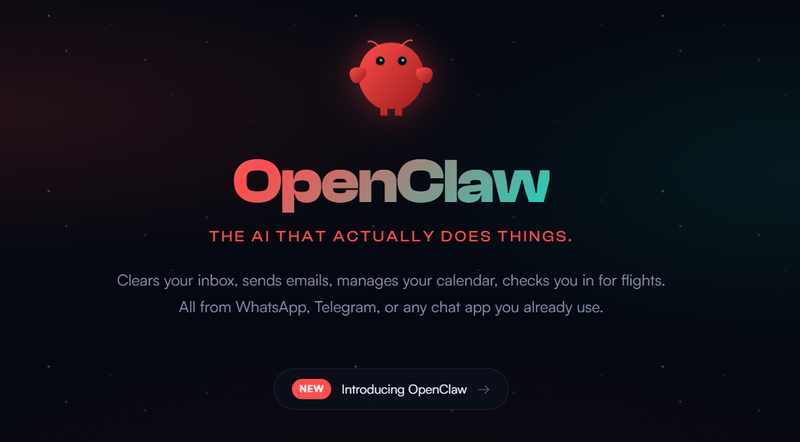
What OpenClaw actually does
OpenClaw runs locally on your hardware and connects to everyday apps you already use. WhatsApp, Telegram, Slack, Discord, email, calendars, file systems. Give it a goal, and it breaks the task into steps, finds the right tools, and executes.
Users have documented the agent sending emails, booking flights, debugging code, managing calendars, and even making purchases. The key difference from traditional AI assistants: OpenClaw can work while you sleep. It runs 24/7 on devices like Mac Minis and pings you only when it needs passwords or payment info.
The rapid rise and rebrand saga
Austrian developer Peter Steinberger created the tool as a personal hobby project in late 2025. Within 24 hours of release, it hit 9,000 GitHub stars. By late January 2026, it had crossed 100,000 stars and attracted around 2 million visitors in a single week.
The project has already been through three names:
Clawdbot (original name, a play on "Claude" with a claw)
Moltbot (after Anthropic requested a trademark change)
OpenClaw (the current "final form" announced January 30)
"The lobster has molted into its final form," the project announced on X. The naming chaos included crypto scammers hijacking the old GitHub username within seconds of the transition.
Why marketers are paying attention
OpenClaw points to where AI assistants are heading. The tool demonstrates that autonomous agents can handle complex, multi-step tasks across platforms, something current chatbots cannot do.
IBM research scientist Kaoutar El Maghraoui noted that OpenClaw challenges assumptions about how AI agents must be built. The open-source approach shows that useful agents don't require the tight vertical integration of enterprise AI products.
Cloudflare's stock surged 14% on January 27 as investors connected the viral AI agent to its infrastructure, which developers use to run OpenClaw locally.
The security concerns are real
Security researchers have raised serious alarms. Palo Alto Networks warned that OpenClaw represents a "lethal trifecta" of vulnerabilities: access to private data, exposure to untrusted content, and the ability to communicate externally.
The companion platform Moltbook, a social network where AI agents interact autonomously, suffered a significant breach. 404 Media reported on January 31 that an exposed database allowed anyone to hijack any AI agent on the site.
"It exploded before anyone thought to check whether the database was properly secured," said security researcher Jameson O'Reilly.
What this means for your strategy
OpenClaw is not ready for production use in business contexts. Creator Peter Steinberger has explicitly said it's "not ready for normies." The tool requires technical setup and carries genuine security risks.
But it signals where the industry is moving. Autonomous AI agents that manage routine tasks across platforms will become standard tools. Marketing teams should start thinking about what tasks could be delegated to such agents and what security frameworks would be needed.
The lobster has shed its shell. The next molt cycle in AI assistants is just beginning.