Key Takeaways:
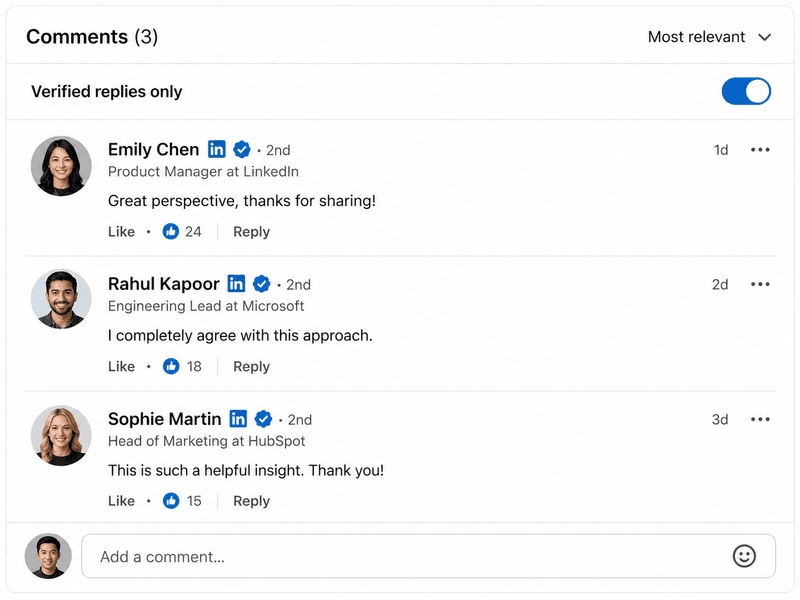
- LinkedIn added a reply filter that lets users see only comments from verified members on any post
- Over 100 million LinkedIn members now have verification badges
- The filter gives verified users priority visibility in comment sections, pushing unverified replies lower
- This follows LinkedIn's algorithm changes in 2025 that favored original expertise and penalized engagement bait
- For B2B marketers using LinkedIn comments for engagement and lead generation, verification just became a visibility factor

LinkedIn is making verification matter more. The platform now lets users filter post replies to show only those from verified members.
Social Media Today and Optimixed both reported the update on April 26. The feature is live and available across LinkedIn's feed.
Over 100 million LinkedIn members now have verification badges. That is a significant base. And the new filter gives those verified accounts a visibility advantage in comment sections that unverified profiles do not get.
How the reply filter works
On any LinkedIn post, users can now toggle a filter that limits visible replies to those from verified members. Unverified comments do not disappear entirely, but they drop below the verified replies in visibility.
For post creators, this means the comment section can be curated without manually hiding or deleting low-quality replies. For readers scanning comments for useful insights, verified replies carry a built-in trust signal.
LinkedIn's verification system uses government ID, work email, or integration with Microsoft Entra to confirm identity. The badge does not verify expertise or credentials. It confirms that the person behind the profile is real and matches their stated identity.
This fits a clear pattern in LinkedIn's recent changes
LinkedIn has been pushing its algorithm toward quality signals for over a year now. The platform's 2025 algorithm updates introduced what internal documents called a "Depth Score" that measures the substantive quality of a post, not just its engagement metrics.
Posts that triggered high engagement through controversy or rage bait were deprioritized. Content demonstrating original thinking, professional expertise, and genuine value was promoted. Several publishers and creators reported views dropping 50% or more when the algorithm shifted away from surface-level engagement.
The verified reply filter extends this philosophy to comments. Instead of the loudest or earliest commenters dominating a post's reply section, verified professionals now have a structural advantage.
What this means for B2B marketers and thought leaders
LinkedIn comments are a real lead generation and relationship-building channel for B2B marketers. Thoughtful comments on high-visibility posts drive profile visits, connection requests, and inbound conversations.
If your profile is not verified and your prospects start using the verified filter, your comments become less visible. That is a direct impact on reach and engagement.
For B2B marketers and sales teams active on LinkedIn, the action steps are practical:
- Verify your LinkedIn profile if you have not already. The process takes minutes and uses government ID, work email, or employer verification
- Verify team members who comment on behalf of your brand or participate in industry conversations
- Prioritize comment quality over volume. Verified status gets your comment seen. Substance keeps the reader engaged
For content creators with large followings, the filter helps manage comment quality without manual moderation. Enabling the filter on posts that attract high volumes of low-quality replies keeps the conversation focused on professional contributions.
LinkedIn's broader bet on trust signals
This update is one of several LinkedIn moves that reward trust and authenticity over raw engagement numbers. The platform has also been investing in newsletter features, collaborative articles powered by AI with expert contributions, and in-app verification prompts.
The competitive context matters. X (formerly Twitter) has struggled with verification credibility since converting its blue checkmark into a paid subscription feature. LinkedIn's approach ties verification to identity confirmation rather than payment. That distinction keeps the badge meaningful as a trust signal.
With 100 million verified members, LinkedIn has reached a tipping point where filtering by verification becomes practical. When the number was smaller, a verified-only filter would have excluded too many legitimate participants. At 100 million, the base is large enough that the filter enriches conversations rather than emptying them.
For professionals and brands investing in LinkedIn as a marketing channel, the message is straightforward. Verification is no longer optional for visibility. It is becoming part of the platform's infrastructure for determining who gets seen and who does not.
Disclaimer: This article is AI-assisted content and may contain errors. LinkedIn features roll out gradually and may not be available to all users simultaneously. Platform features and verification requirements change. Verify with LinkedIn's official communications.