Key Takeaways:
- Google published "Optimizing your website for generative AI features on Google Search" on May 15, announced by John Mueller via Search Central Blog
- The guide states directly: "From Google Search's perspective, optimizing for generative AI search is optimizing for the search experience, and thus still SEO"
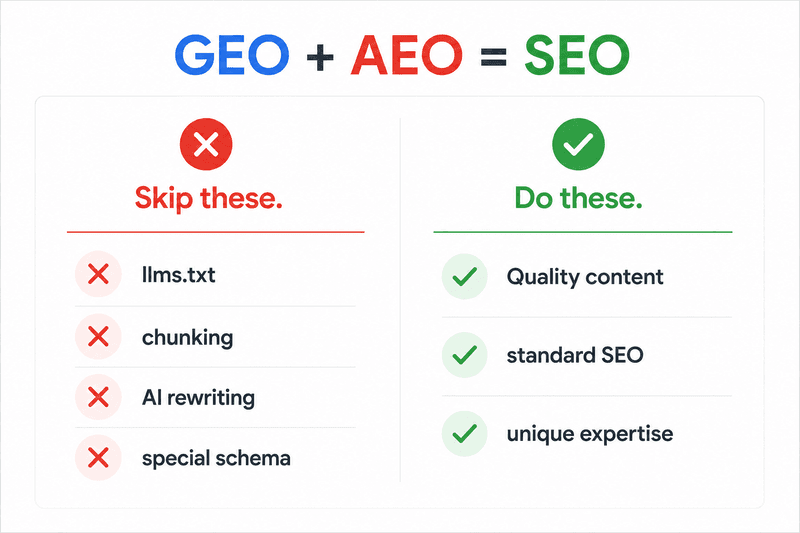
- Google says you do not need llms.txt files, content chunking, AI-specific rewriting, or special schema markup for its AI features
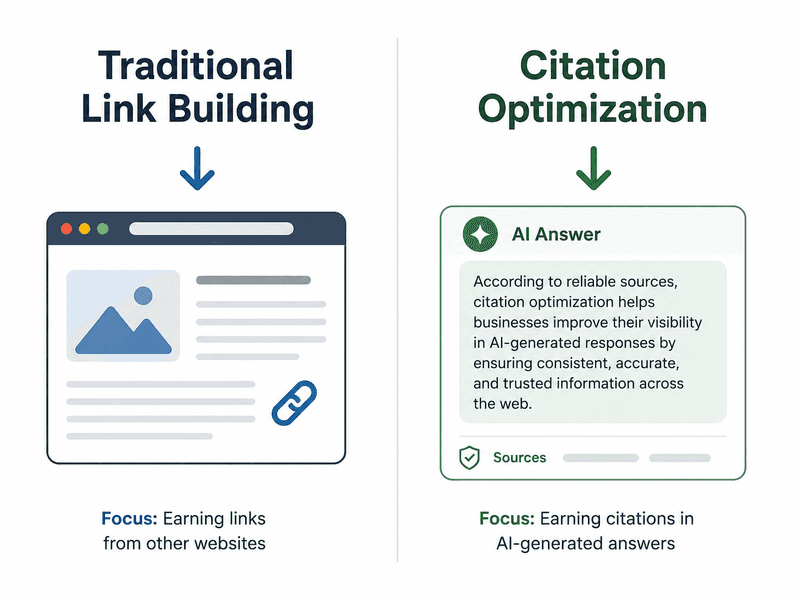
- The guide warns that "inauthentic mentions" (manufactured brand references) are risky and may backfire
- Google's AI features use retrieval-augmented generation (RAG) and query fan-out to pull content from its existing Search index
An entire cottage industry just got a reality check from Google.
On May 15, John Mueller announced a new documentation page through the Google Search Central Blog. The title: "Optimizing your website for generative AI features on Google Search." The content is the most explicit guidance Google has ever published about what works and what does not for AI search visibility.
The opening position is blunt.
Google defines AEO as "answer engine optimization" and GEO as "generative engine optimization." Then it says: "From Google Search's perspective, optimizing for generative AI search is optimizing for the search experience, and thus still SEO."
That one sentence settles a debate that has generated thousands of LinkedIn posts, conference talks, and consulting packages over the past two years.
Google named four specific tactics you can ignore
The mythbusting section of the guide is where things get specific. Google is now telling site owners in its own documentation to skip tactics that a growing number of AEO and GEO service providers have been promoting.
On llms.txt files: Google says you do not need to create machine-readable files, AI text files, or Markdown specifically for AI systems. Google may discover and index many file types, but they do not receive special treatment.
On content chunking: There is no need to break content into small pieces for AI consumption.
Google's systems "are able to understand the nuance of multiple topics on a page and show the relevant piece to users." Danny Sullivan made similar comments in January, saying Google engineers recommended against chunking.
On AI-specific rewriting: You do not need to rewrite content in a format specifically designed for AI retrieval. Content that works well for human readers works well for AI features.
On special schema: Overfocusing on structured data for AI visibility is unnecessary. Standard schema is helpful, but there is no secret AI-specific markup.
Glenn Gabe called the guide "so so good" and highlighted: "No llms.txt needed. No chunking needed. Seeing inauthentic mentions is risky."
The "inauthentic mentions" warning is new and important
Google included a warning about brand mentions that are manufactured rather than earned. The guide suggests that artificial brand placements designed to influence AI citations could backfire.
This is aimed at a specific practice that has grown in 2026: paying for brand mentions on high-authority sites specifically to get cited in AI Overviews. Google is signaling that it can detect when mentions are inauthentic and may discount or penalize them.
For content marketers who have been told to "get mentioned everywhere," this is a calibration moment. Earned mentions from genuine editorial coverage still carry weight. Manufactured placements may not.
What the guide says actually works
The positive guidance is familiar to anyone who has followed SEO best practices over the past decade. Google recommends:
- Creating "valuable, unique, non-commodity content" for your audience
- Following standard SEO fundamentals: crawlability, indexability, and clear site structure
- Writing content that demonstrates firsthand experience and genuine expertise
- Optimizing local, shopping, image, and video content using existing best practices
- Ensuring content is accessible and well-structured for both humans and machines
The guide also includes early guidance on AI agents and agentic experiences. Google frames this as optional and relevant only for businesses where agent access makes sense. The phrasing suggests agent optimization is early-stage and not something most sites need to prioritize today.
The industry reaction was sharp and immediate
Lily Ray posted on X: "The GEO bros will not be happy." Pedro Dias agreed. Orit Mutznik declared, "Happy GEO is Dead Day." Aleyda Solis walked through the guide point by point, confirming alignment with standard SEO advice.
The reaction reflects a frustration that has been building. Over the past 18 months, conferences, courses, and consulting services have promoted AEO and GEO as separate disciplines requiring specialized tools and techniques. Google's guide says that is not the case for its own AI features.
The distinction matters: this guidance applies specifically to Google Search AI features (AI Overviews, AI Mode). Other platforms like ChatGPT and Perplexity may weight signals differently. But for Google, which still dominates search traffic, the message is clear.
What content teams should take away
Stop buying separate AEO or GEO services for Google visibility. Standard SEO covers it.
Focus on content that a human expert would write. Original research, firsthand experience, specific data, and clear opinions are what Google's AI features are built to surface.
Do not invest in llms.txt files, content chunking tools, or AI-specific rewriting workflows for Google. Those resources are better spent on content quality and technical SEO fundamentals.
Keep monitoring how other AI platforms (ChatGPT, Perplexity, Claude) handle citations. Google's guidance does not speak for those systems. But for the platform that still sends the most search traffic, the answer is simple: good SEO is good AI SEO.
Disclaimer: This article is AI-assisted content and may contain errors. Details are from Google's official documentation page "Optimizing your website for generative AI features on Google Search," published May 15, 2026.