Key Takeaways:
- AI-generated fake videos of the Iran-Israel strikes went viral within hours, reaching millions of views across X, TikTok, and Instagram
- Researchers flagged fabricated footage of destroyed cities, downed fighter jets, and protests that never happened
- Brands face urgent brand safety risks as ads appear next to unverified war content
- Keyword exclusion lists alone can no longer protect ad placements during fast-moving geopolitical events
- Content marketers who invest in verified, trustworthy content will benefit as audience trust erodes elsewhere

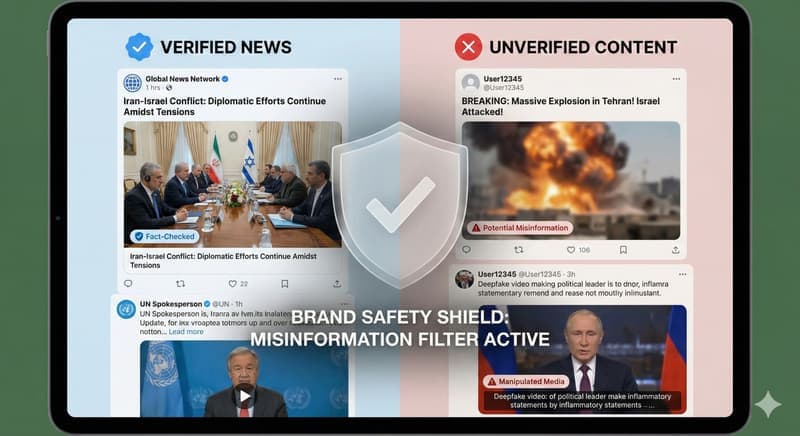
Within hours of the US and Israeli strikes on Iran on February 28, social media platforms were overwhelmed with fake content. AI-generated videos, recycled footage from older conflicts, and fabricated images flooded X, TikTok, and Instagram.
NPR reported that the internet was awash with unverified strike videos, many viewed millions of times before any fact-checking caught up.
This is the first full-scale AI misinformation war
The European Digital Media Observatory (EDMO) had already flagged the Iran-Israel conflict as the first where generative AI played a central role in shaping public perception. During the 2025 escalation, researchers detected AI-generated scenes of a destroyed Tel Aviv, fake downed F-35 jets, and fabricated protest footage.
That pattern repeated this weekend, only faster and at greater scale.
HonestReporting documented a wave of viral posts on March 1 that spread conspiracy theories, misattributed footage, and false claims about the conflict. Many posts gained hundreds of thousands of likes before corrections appeared.
What this means for brands and advertisers
For marketers running paid campaigns, the risk is immediate. Ads placed through programmatic channels can end up next to graphic war content, conspiracy threads, or AI-generated misinformation.
The Brand Safety Institute warned in a recent report that traditional keyword blocklists are failing during conflicts because:
- Misinformation spreads faster than blocklist updates
- AI-generated content bypasses standard detection tools
- Platform moderation cannot keep pace with the volume
A DoubleVerify study found that 64% of global consumers say the content near an ad affects how they perceive the brand. During a conflict like this, the stakes multiply.
What content marketers should do now
Brands with active ad campaigns should audit placements immediately, especially on X and programmatic display networks. Tightening brand safety controls through tools like IAS, DoubleVerify, or platform-native controls is a starting point.
But the bigger takeaway is about organic content. As trust in social media erodes further, audiences are actively looking for reliable sources. Content that demonstrates expertise, cites verified sources, and avoids sensationalism will stand out.
Google's E-E-A-T framework was built for exactly this kind of environment. Brands that publish fact-checked, well-sourced content are better positioned for both search visibility and audience trust.
The misinformation problem is not going away. If anything, every major geopolitical event from here on will come with a wave of AI-generated fakes. Marketers who treat content credibility as a competitive advantage, not just a checkbox, will be the ones audiences return to.