Key facts:
- Launched: July 9 2025
- Core feature: Built-in AI assistant with task execution.
- Model: Shifts from search → click → browse to intent → action.
- Optimization focus: Structured content, semantic markup, and task-ready data.
- Search model: Comet runs an agentic search flow: queries become multi-step tasks that fetch, summarize, and cite web data.
- Integration: Offers sidebar “assistant” that handles writing, coding, or summarization tasks directly inside the browser tab.
Let’s be honest. SEO as we know it is fragmenting. Google’s still crucial, but it’s no longer the only gatekeeper to online visibility. AI browsers are rewriting the discovery funnel.
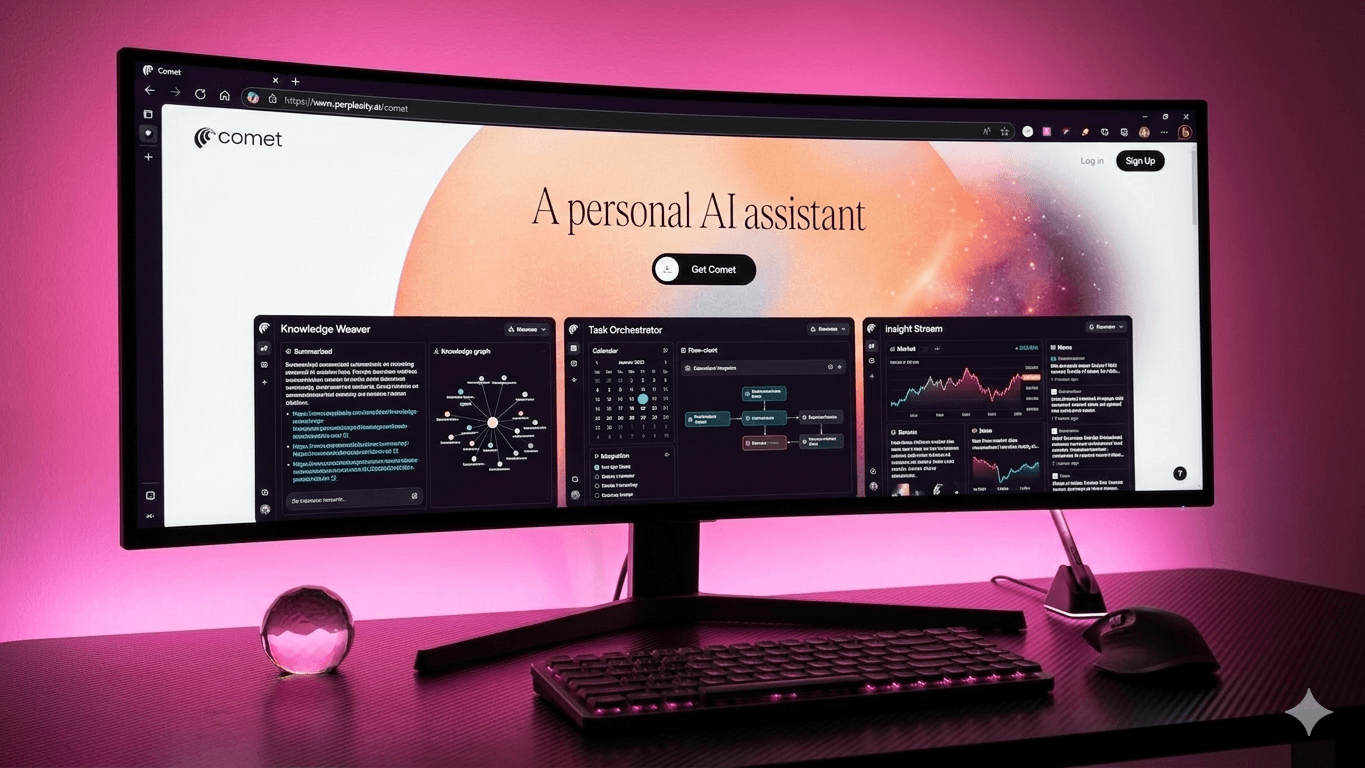
Perplexity Comet, launched in July 2025, doesn’t just fetch results, it interprets them. It blends natural language search, task automation, and contextual citations. When users ask questions, Comet curates summaries, references credible sites, and even performs follow-up actions.
Instead of ten links, Comet answers queries by summarizing web pages, citing sources, and completing tasks like drafting emails or generating reports. It’s where browsing, reasoning, and search merge.
For you, this means optimization isn’t about rank anymore. It’s about citation visibility: being the source AI browsers rely on when generating answers.
That’s the essence of Perplexity Comet Search Optimization (PCSO).
Why PCSO matters
Traditional SEO stops at rankings.
Comet changes the rules: visibility now depends on being cited by AI systems that summarize and act on content, not just list it.
Citation-first, not click-first
SEO aims for users to click your link. PCSO’s goal is for AI browsers like Comet to quote your content inside answers: visibility happens before the click.
Intent completion
Comet reads user prompts like tasks (“Find the best CRM for startups”) instead of keywords. PCSO means structuring your pages to help AI complete that task, not just match a phrase.
Entity clarity over keyword density
Traditional SEO rewards keywords. PCSO rewards entities: people, tools, stats, and brand names that the AI can verify and cite accurately.
Data freshness and factuality matter more
AI browsers prioritize recent and verifiable data. PCSO demands frequent updates, timestamped facts, and citations from credible sources.
Structured markup over backlinks
Backlinks still help, but Comet relies more on schema markup, metadata, and semantic consistency to identify trustworthy pages.
Machine readability as a ranking signal
If Comet can’t parse your structure or meaning, you don’t exist in its results - even if humans can read your page fine.
Visibility in zero-click environments
Users get answers instantly in Comet summaries. PCSO helps your brand appear within those answers, maintaining presence even when users don’t visit your site.
Human-AI dual optimization
You’re not writing just for readers anymore. You’re writing for interpreters: AI systems that need clarity, brevity, and verified context to trust your content.
How to optimize for Comet (PCSO)
Optimizing for Comet isn’t about gaming keywords, it’s about feeding AI with structured, credible, and current data. Your content must be machine-readable, context-rich, and ready for task execution.
Step A: Structure for agents
Use schema.org markup (Article, FAQ, HowTo). Add concise, fact-dense intros. Name entities consistently - products, people, and places must match public data graphs.
Step B: Enable task-ready pages
AI browsers prefer pages that help execute user intent. Include “Key Takeaways,” “Use Cases,” or “Next Steps.” Keep scripts lean. Optimize Core Web Vitals, especially LCP under 2.5 s.
Step C: Measure AI visibility
Track mentions in AI-generated answers. Monitor traffic from Perplexity.com or Comet referral domains. Adjust structure and tone when citations drop.
Step D: Keep humans in the loop
Don’t over-serve the AI layer. Offer summaries for agents, deeper insights for real visitors. Retain gated or advanced data for user interaction.
Short on time? WrittenlyHub helps brands turn research into authority.
AEO (Comet) Guidance
Answer Engine Optimization (AEO) for Comet means designing content that AI can interpret confidently. Focus on:
- Precision: Short, factual statements with verifiable data.
- Authority: Outbound links to credible, recent sources.
- Entity clarity: Consistent naming and disambiguation (use Knowledge Graph terms).
- Structure: Mark up FAQs, HowTos, and summaries for direct extraction.
- Recency: Comet prefers sources updated within 90 days.
The closer your content fits these patterns, the more likely Comet cites you in answers.
Pros and cons of PCSO
Before jumping in, it’s worth weighing the trade-offs. PCSO opens fresh visibility channels but also reshapes how control, attribution, and performance are measured in AI-driven search.
Pros:
- Builds authority through citations and verified mentions.
- Expands brand visibility beyond search results.
- Rewards factual, structured, and recent content.
Cons:
- Analytics and tracking remain experimental.
- AI summaries can reduce click-through rates.
- Requires balancing transparency with proprietary insight.
The next move for marketers
PCSO isn’t optional, it’s the logical next step in SEO’s evolution. You’re no longer fighting for rank; you’re competing to be the cited source shaping AI-browser answers.
[Link: How to Make Your Content Discoverable on Perplexity Comet]
Brands that adapt early to Comet’s model will own the AI discovery layer before it matures.
Want first-mover visibility? Book a consultation with WrittenlyHub.
FAQs on Perplexity comet search optimization
1. What is PCSO?
Perplexity Comet Search Optimization: optimizing content for AI browsers like Comet to earn citations.
2. How is PCSO different from SEO?
PCSO targets AI visibility, not search rankings. It prioritizes structure and factual precision.
3. Does PCSO affect Google SEO?
Yes. Schema, clarity, and authority signals improve both Google and Comet visibility.
4. What’s the best way to start PCSO?
Audit your site’s structure, markup, and factual summaries for AI readability.