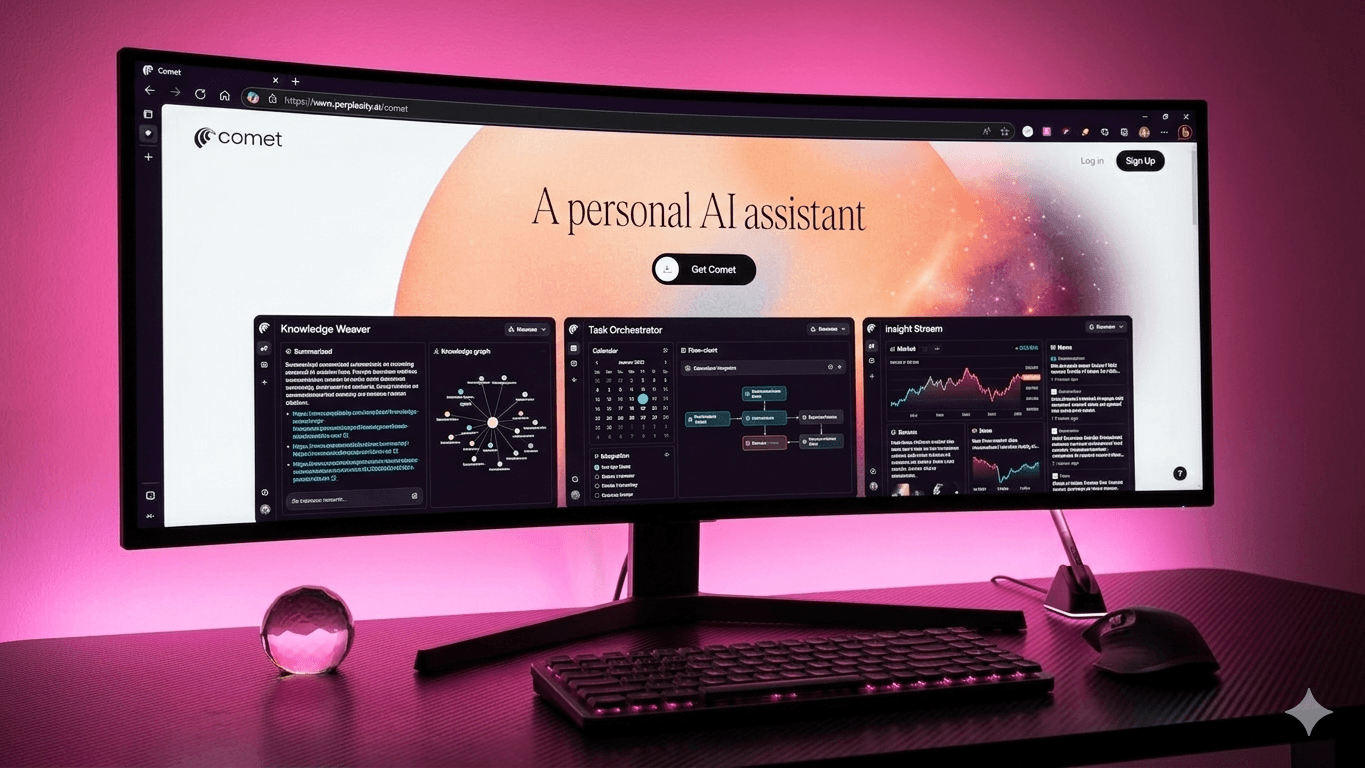
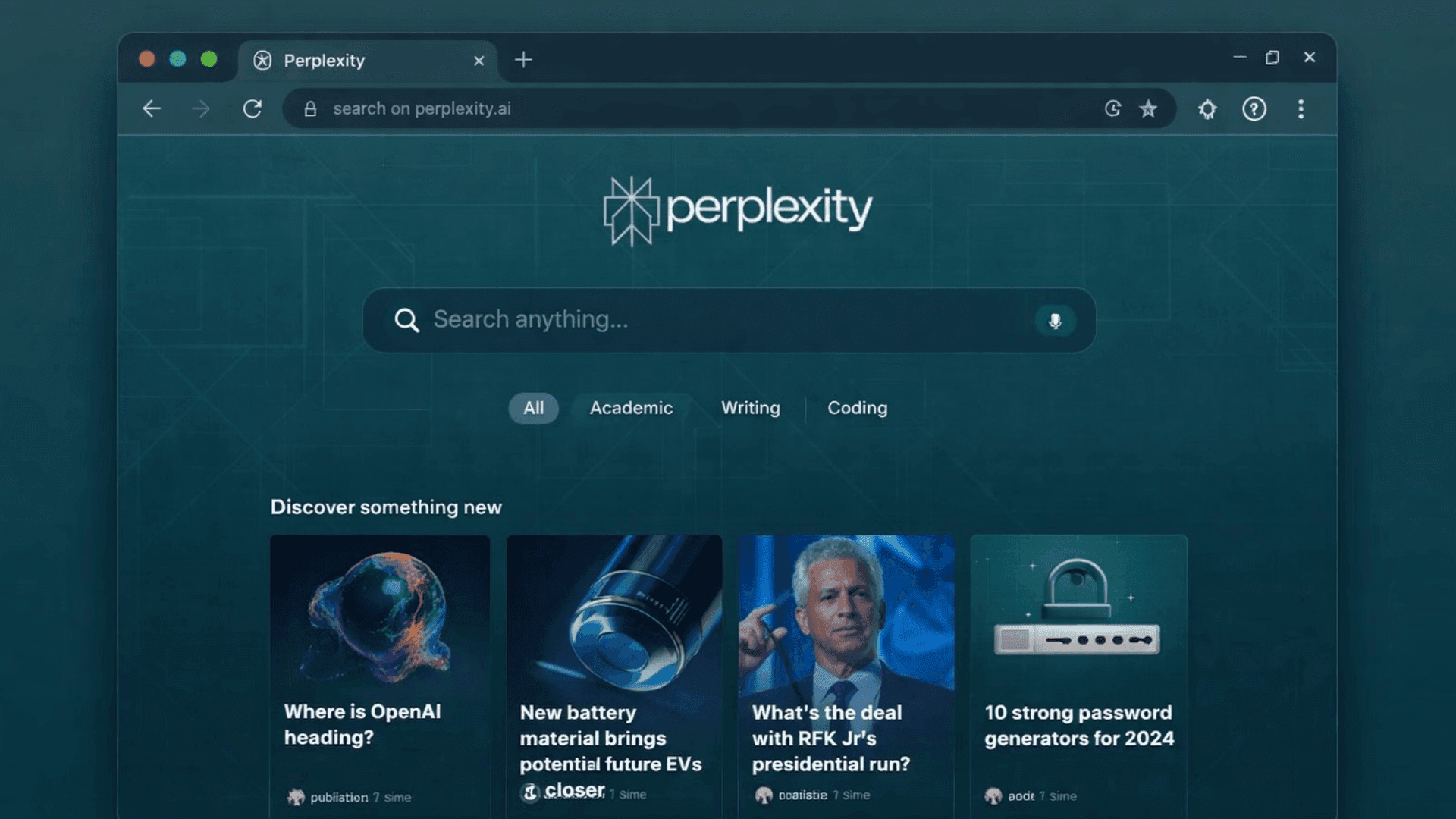
Perplexity Comet is an AI search and reasoning engine that could change the game for you. When it references your content, you show up where decisions are made instead of staying buried on page 2.
But the rules are different here. Google crawls and ranks pages. Comet evaluates authority, clarity, and citability in real time. It surfaces answers and decides what's trustworthy before anyone even clicks.
Brands that adapt now will own the answer space before their competitors figure it out.
So how do you make sure Comet picks your content over everyone else's? It starts with understanding what Comet actually looks for and then structuring your content to match. Here's what you need to do.
What does Comet actually look for when it ranks content?
Perplexity processed over 780 million monthly queries across 238 countries as of mid-2025. At that scale, your content isn't competing for page-one rankings anymore—it's competing to be the source an AI engine cites.
Comet uses AI plus real-time web access to evaluate every page it crawls. According to the official blog, it “transforms any webpage into a portal of curiosity” and enables tangential exploration of ideas. That evaluation takes place in seconds and is based on clarity, reliability, and citability.
If your content doesn't meet these standards, Comet skips it. For any AI search engine, structure matters, accuracy matters, and machine readability now matters as much as human readability.
Getting your content in front of Comet: 6 practices you must follow
Here are some proven ways to get your content to surface in an AI browser environment like Comet.
1. Prioritize entity clarity and author signals
Perplexity Comet evaluates the entities behind a page, such as the author, organization, and the main topic, beyond the text. Clear, consistent entity signals help the system verify expertise. One recent analysis showed that entity-driven pages had a 35% higher likelihood of AI citations.
To make that work in practice:
- Add Article, Author, and Organization schema
- Include a short author bio
- Use consistent naming across your site and profiles
- Link key entities with SameAs
These signals make it easier for Comet to understand who you are and why your content should be cited.
2. Use search-intent-aligned structure
Comet prefers content that answers the user's question quickly and cleanly. Start with the core definition or outcome, then move into details. Keep sentences short. Use clear headings, ordered steps, and bullets to reduce the model's interpretation load.
A 2025 audit of answer engines found that structured, top-loaded explanations improved citation reliability because AI could map answers to specific text segments. This is why clarity often outperforms depth when the structure is messy.
3. Cite reputable primary sources
If you want Comet to cite you, back your claims with verifiable evidence. A recent analysis found that 86% of AI citations came from verified or brand-owned sources, not generic blogs.
That's not a coincidence. AI engines skip content they can't trace back to an authority.
So, link to trusted, dated sources such as official documentation, government data, industry research, or recognized standards. You must include access dates to signal freshness. The stronger your sources, the more likely Comet surfaces your content.
4. Optimize metadata for AI retrieval
Metadata still guides how AI engines find and categorize your content. Write titles and descriptions that reflect the core entity and query - factual, not promotional. Make sure they align with your H1 and H2 structure to avoid signal mismatch.
This consistency helps Comet map your content to the right topics during indexing and reasoning, especially when multiple pages cover similar themes. If your metadata says one thing and your headings say another, the AI skips you.
Link to Perplexity Comet Search Optimization (PCSO): The New SEO Frontier
5. Make your site crawl-friendly
If an AI system can't parse your page, it won't surface your content. Comet and other AI engines need clean, structured pages they can read and evaluate quickly.
Here's how to make your site easy for Comet to crawl:
- Use clean HTML with proper heading hierarchy
- Avoid aggressive pop-ups that block content on load
- Add XML sitemaps and canonical tags to guide indexing
- Keep page load times under three seconds
- Minimize JavaScript rendering issues that hide text from crawlers
Basically, think like a machine: clarity, order, and minimal friction. The easier you make it for Comet to read your site, the more likely it is to cite you.
6. Publish research, opinions, and first-party data
When you give Perplexity Comet something unique, you increase your chances of getting cited. It's actively looking for sources that can't be found anywhere else.
First-party research, unique commentary, benchmarks, and proprietary insights carry more weight than summaries. Brands that publish annual reports or original data show up more often in AI-generated answers because no one else can replicate that information.
Final thoughts
AI-driven browsers like Comet don't reward content the way Google does. They prioritize clarity, authority, and structure. Plus, they decide in seconds whether your page is worth citing.
To show up in Comet's answers, you need clear entity signals, trusted sources, structured metadata, and a technically sound site. If your content checks those boxes, you shift from “just another article” to “the article the AI picks.”
So, want to be the brand that shows up every time Comet runs a search?
Connect with WrittenlyHub, a full-service marketing agency that has guided over 30 brands to the top of AI overviews and LLM-generated results. We'll audit your pages, identify what's missing, and help you own the Comet space!
FAQs
What types of content does Comet prefer?
Comet prefers factual, authoritative content that clearly identifies entities, includes citations, and aligns with user intent.
Should I update old content for Comet visibility?
Yes, updating with fresh data, timestamps, and verification signals improves your chances of being cited by AI-driven engines.
Does schema markup help with Comet discoverability?
Schema markup like Article, Author, Organization, and SameAs helps clarify entities for AI systems and often acts as a ranking signal.
Will generic list-style blog posts get discovered by Comet?
Generic content lacks unique signals; first-party data, expert commentary, and clear structure boost your visibility far more.